What's Thermal Imaging Technology of IP Products?
Thermal imaging is the technique of using the heat given off by an object to produce an image of it.
Thermal imaging cameras usually detect radiation in the long-infrared range of the electromagnetic spectrum (roughly 8,000–14,000 nanometers or 8–14 µm) and produce images of that radiation. Since infrared radiation is emitted by all objects with a temperature above absolute zero(-273℃) according to the black body radiation law, thermography makes it possible to see one’s environment with or without visible illumination.
Advantages of Thermal Imaging about IP Products
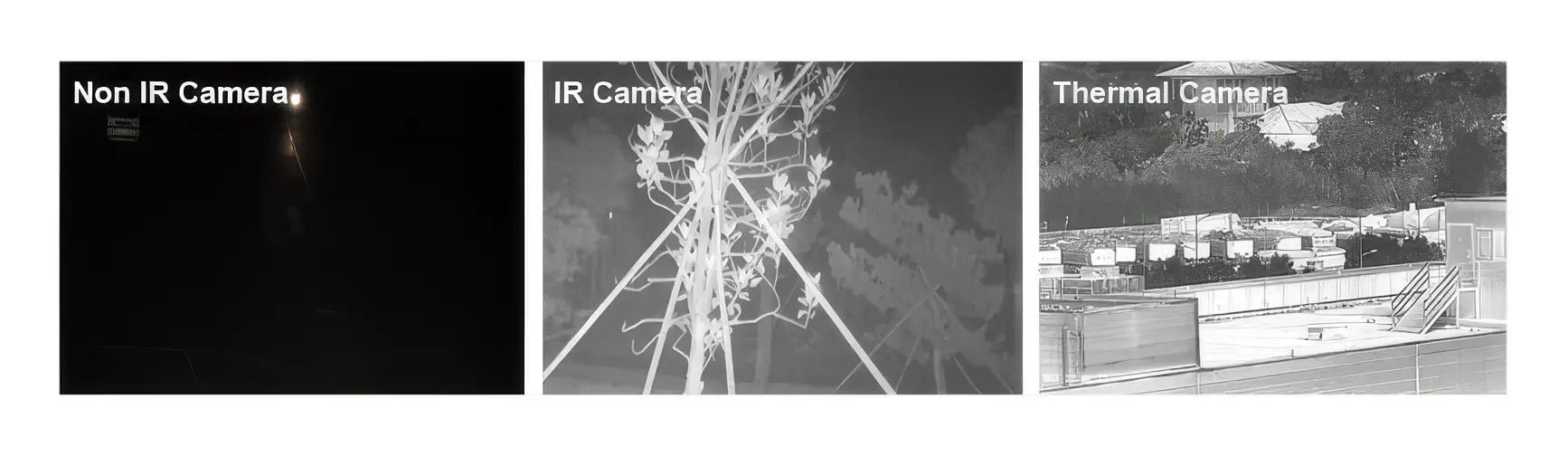
Thermal cameras are not affected by lighting conditions – either extremely low light or even no light at all. And compared with imaging with visible light, thermal cameras are much less impacted by weather conditions such as fog, smog, rain, and snow, so they can work in virtually any environment, anytime.
IP Camera Real-time Temperature Measuring
Excellent Adaptability of Network Products
The thermal imaging cameras is not affected by lighting conditions – either extremely low light or even no light at all. And compared with imaging with visible light, thermal cameras are much less impacted by weather conditions such as fog, smog, rain and snow, so that they can work in virtually any environment, anytime.
All-day Surveillance about IP Products
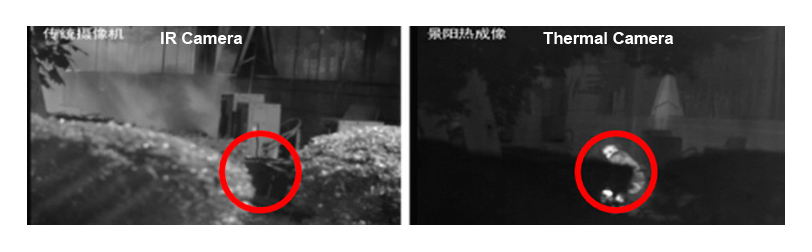
The thermal camera not only outperforms a visible light camera in dark scenarios – it is also a great tool for detecting people and objects in 24/7 surveillance.